The Most Valuable Architecture Is Recognisable
Feb 17, 2026
Architecture has always served a function. But the buildings that shape cities, attract global attention, and define architectural eras do something further. They become recognisable.
Not because they are louder, but because they are clearer.
Recognisable architecture communicates intent through its form, materials, structure, and presence. It becomes identifiable without explanation. Increasingly, this recognisability is what separates architecture that simply exists from architecture that strengthens the position of the institution, developer, or practice behind it.
Recognition increases perceived and actual value
When MAD Architects completed the Fenix Museum in Rotterdam in 2025, the recognisability of a single architectural intervention defined the entire project.
At its centre, a 30-metre-tall stainless steel double-helix staircase rises through the building’s glass atrium. The structure, known as the “Tornado”, is formed from hundreds of reflective steel panels and is immediately identifiable as the focal point of the museum.
This element did more than solve circulation. It created identity.
The staircase became the defining image associated with the museum, transforming a restored warehouse into a globally recognisable cultural destination.
Recognition positioned the institution immediately.
The architecture became the signal.
Form creates immediate recognition
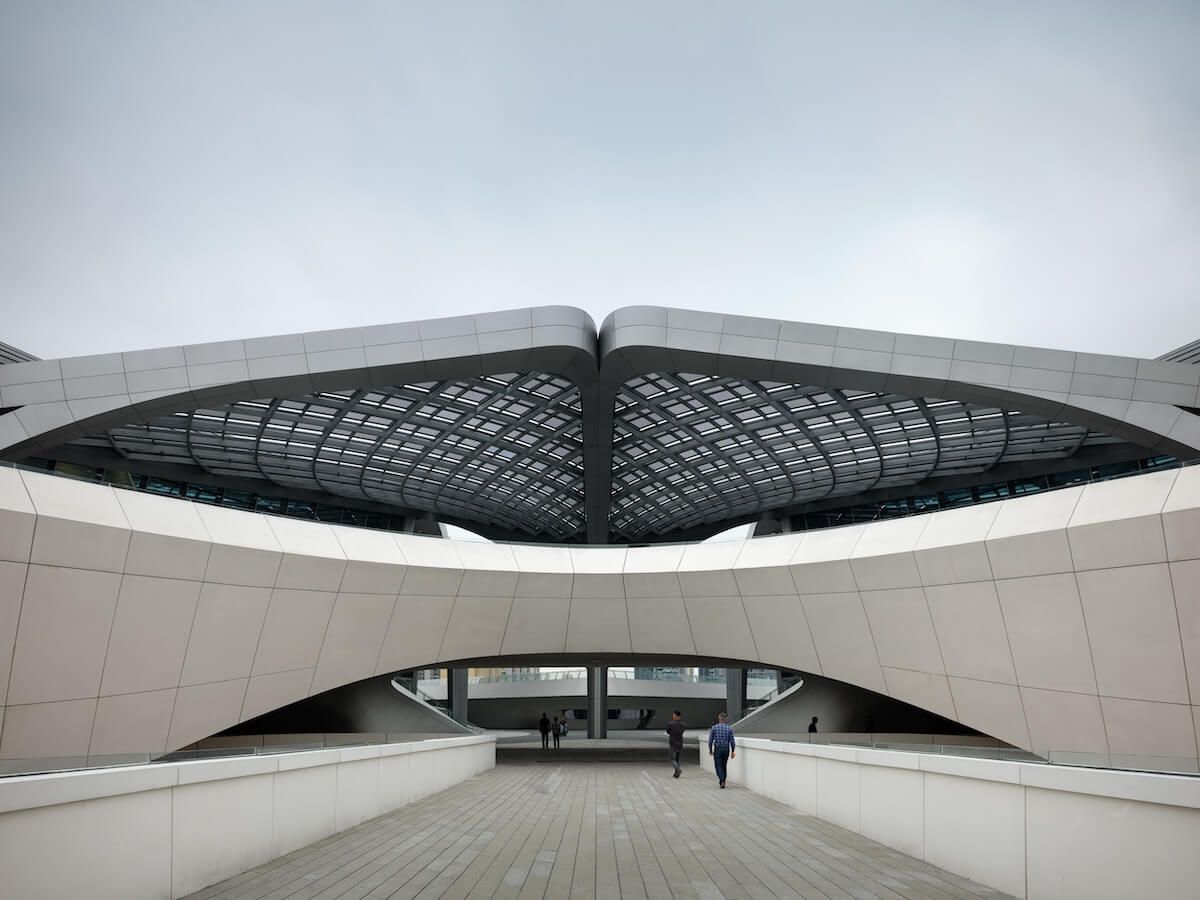
Zaha Hadid Architects’ Zhuhai Jinwan Civic Art Centre, completed in 2023, demonstrates how recognisable form can define a cultural building at city scale.
The building’s roof structure is inspired by migratory bird formations, creating a sweeping latticed canopy that connects multiple cultural venues into a single continuous form. The structure spans large distances while appearing lightweight and fluid.
This roof is not applied expression. It is the architectural identity.
The form makes the building identifiable instantly, from aerial view, skyline view, or photograph.
This clarity allowed the project to become a defining landmark within Zhuhai’s new cultural district.
The architecture established presence before the institution itself had time to build recognition.
Materials can define architectural identity
Kengo Kuma’s UCCA Clay Museum, completed in 2024, demonstrates how material decisions alone can create recognisable architecture.
The building is clad in over 3,600 handmade ceramic tiles, produced by local artisans and inspired by the region’s history as China’s ceramic capital. The façade reflects subtle variations in colour and texture, directly embedding local craft into the building’s identity.
The material is not decorative. It defines the architecture’s presence.
This clarity makes the building identifiable immediately, while reinforcing its cultural relevance and authenticity.
Material becomes both architectural and institutional identity.
Recognition compounds over time
Recognisable buildings gain disproportionate visibility.
They are more likely to be published, shared, and referenced. They become visual shorthand for institutions and cities.
Projects such as the Fenix Museum or Jinwan Civic Art Centre quickly became defining images associated with their institutions, not through marketing, but through architectural clarity.
Each exposure reinforces recognition.
Over time, recognisable architecture strengthens cultural authority and commercial value simultaneously.
Recognition compounds.
The same principle applies to architecture practices
Architecture practices operate within the same environment.
Clients encounter hundreds of firms and thousands of projects. Recognition creates clarity within that complexity.
Practices that are recognisable are easier to understand. Their work reflects consistent intent. Their projects carry a defined architectural position.
This makes them easier to trust and easier to select.
Recognition strengthens positioning.
Over time, this positioning attracts higher-value opportunities, more ambitious commissions, and greater influence.
Recognition begins before architecture takes form
Recognisable architecture is not created accidentally. It is the result of clarity before design begins.
It requires defined intent. Clear principles. Consistent decisions in form, structure, and material.
Without this clarity, buildings may function well, but they do not contribute to a recognisable architectural body of work.
In an increasingly competitive global environment, recognisability has become one of architecture’s most valuable outcomes.
Not as a stylistic preference, but as a strategic advantage.
At CJ Studio, this is the lens we use when shaping architecture and cultural brands.
Clear positioning first, defined intent throughout, and identity systems that make practices immediately understood and consistently recognisable.
If you’re interested in understanding how your practice can strengthen its clarity, distinction, and long-term relevance, you can enquire with us here.