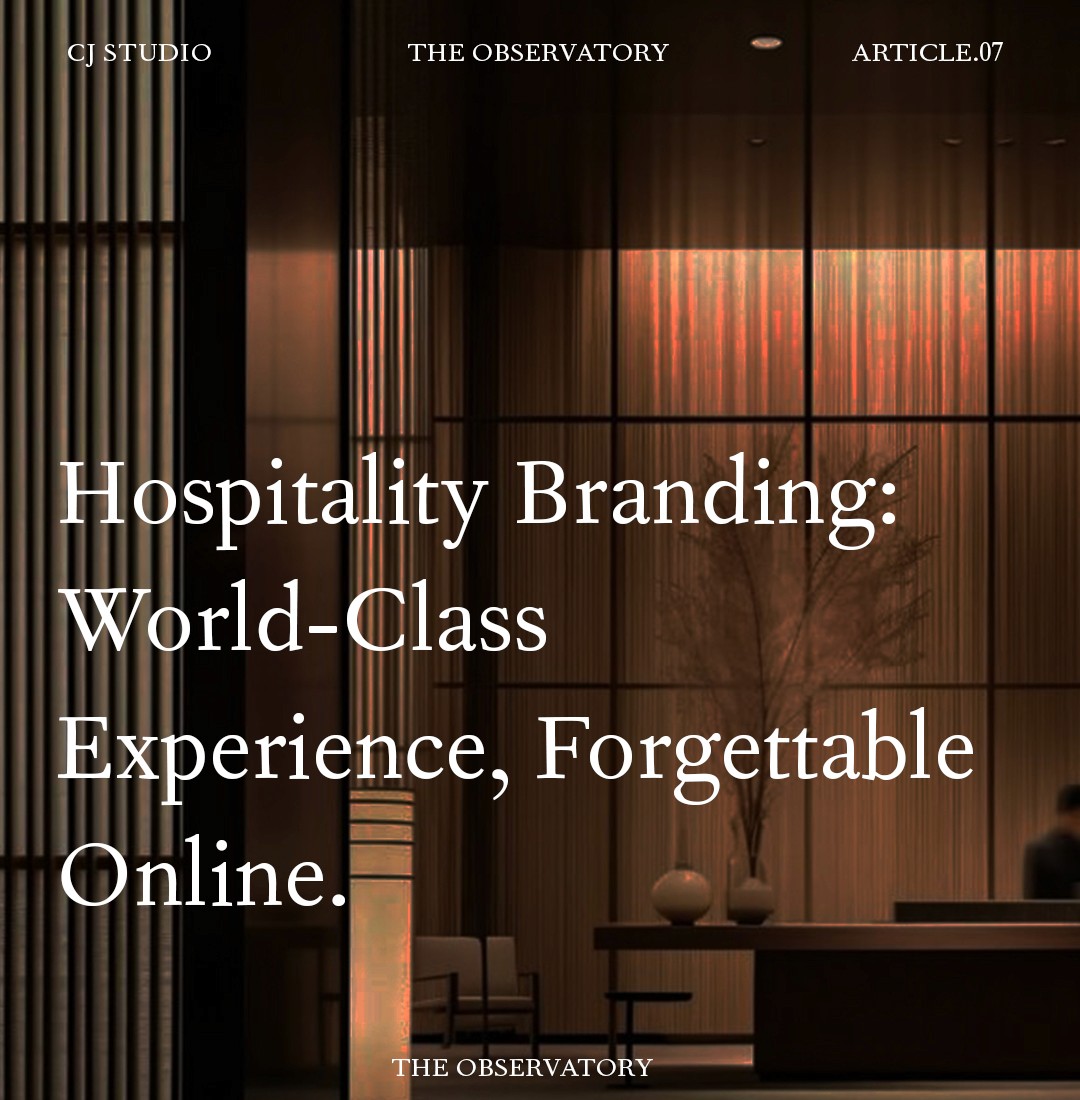
The best hospitality experience in your city is losing bookings to a lesser one. Not because the rooms are better elsewhere. Not because the location is more convenient. Because somewhere along the line, the brand stopped communicating what the experience actually delivers.
Most boutique hotels and independent resorts have invested years into the stay. The atmosphere, the details, the quality of presence that guests feel but struggle to articulate. What they have not invested in with the same intention is the journey that precedes it.
The gap between the experience and the brand is where bookings are lost.
The Experience Begins Before the Guest Arrives
Every guest decision starts somewhere. A search, a recommendation, an image that stops the scroll. That first contact is not a preview of the stay. For most people, it is the stay. It is the moment the brand either earns trust or loses it.
The problem is that most hospitality brands treat the online presence as a catalogue. Rooms listed. Rates displayed. A gallery of images that show the property without communicating the feeling of it. The decision-making moment is being met with information when it should be met with experience.
A guest does not book a room. They book a feeling they believe they will have. If the brand cannot communicate that feeling from the first point of contact, the experience you have built becomes invisible at the moment it matters most.
Coherence Is Not a Branding Afterthought. It Is a Strategic Decision.
When the brand is coherent from the first impression through to checkout, something changes in the guest relationship. The stay does not feel like a discovery. It feels like an arrival. The guest is not surprised by what they find. They are confirmed in what they already believed.
That coherence is not achieved by accident. It is achieved when the brand has a clear point of view about what the experience is, who it is for, and how every touchpoint communicates that consistently. Without that clarity, even the best-looking website cannot close the gap.
Aman Resorts has operated this way since the beginning. Their digital presence carries the same quality of stillness and intention that defines the physical experience. A guest who encounters the brand online for the first time absorbs an atmosphere before they absorb information. By the time they arrive at any Aman property, the experience feels like a continuation of something already started. There is no gap between the promise and the reality.
Philosophy First. Property Second.
The most coherent hospitality brands do not lead with what they have. They lead with what they believe. The property becomes proof of a position, not the position itself.
This distinction matters because guests who book on position are not shopping on price. They are not comparing thread counts or square footage. They are deciding whether a brand understands them and whether the experience it offers reflects something they value.
Six Senses built their entire brand identity around a philosophy of wellness, sustainability, and sensory connection. Every piece of content, every brand touchpoint, and every communication leads with the ethos before it introduces the property. By the time a prospective guest reaches a room page, the decision has largely already been made. The brand has done the work.
The Gap Has a Commercial Cost
The hospitality industry talks extensively about the cost of OTA dependency and the value of direct bookings. Less discussed is the role brand coherence plays in driving them.
A guest who fully understands what an experience offers before they arrive is a guest who books direct, pays full rate, and returns. The brand has already qualified them. The experience confirms what the brand established. That cycle compounds over time into loyalty that no distribution channel can manufacture.
Singita, the conservation-led safari brand operating across Africa, maintains a brand presence that communicates the scale, stillness, and meaning of their locations before a guest has ever stepped foot on the continent. The visual identity, the editorial tone, and the storytelling across every channel close the gap between what the experience delivers and what the brand communicates. The result is a guest who arrives already invested, already connected, and already certain they made the right decision.
The Gap Closes When the Brand Does Its Job
The experience you have built has value. The question is whether your brand communicates that value at every point in the journey or whether it leaves the guest to discover it only after they arrive.
The stay earns the loyalty. The brand earns the booking. The gap between them is a strategic choice.
Questions to Consider
Does your brand communicate what your experience actually delivers?
Does your online presence feel like your property does in person?
If you disappeared online tomorrow, would guests know what they had missed?
CJ Studio works with hospitality businesses on brand strategy and positioning. If this article raised questions about your own institution's identity, you can enquire with us here.